
Marine
The marine industry stands in the center of international trade and commerce. However, the use of traditional heavy fuel oil as marine fuel has left a significant environmental footprint in the industry due to its association with high GHG emissions. The vast adoption of alternative fuels for use in seagoing vessels currently stands as a key priority to decarbonise this sector.
Facts & Figures

3%
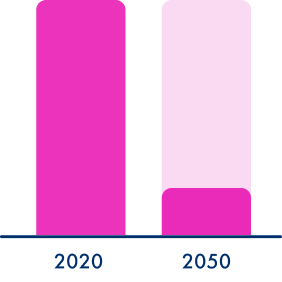
80%
GHG reduction of energy by ships calling at EEA ports by 2050

1.6 trillion
The use of alternative replacement marine fuels have significant potential to reduce the sector’s greenhouse gas emissions. However, widespread adoption will require overcoming obstacles related to infrastructure, fuel availability, and cost-effectiveness.
Our Focus Areas
Biofuels
PROS:
- Biofuels can be used as a drop-in fuel without major changes to existing infrastructure
CONS:
- Limited feedstock supply
LNG
PROS:
- Benefit from low infrastructure investment costs as they can be used as drop-in fuels and delivered via existing LNG bunkering infrastructure
- LNG vessels comprise of the largest share of the global alternative-fuelled vessel fleet
CONS:
- Methane slip, which may offset the benefits of LNG consumption compared to traditional fossil fuels.
Green Ammonia
PROS:
- Green ammonia offers a greater carbon emission reduction potential from a well-to-wake basis compared to grey LNG
CONS:
- Adoption as a bunker fuel is logistically challenged as it require significant infrastructure investment across the entire supply chain.
- Low energy density.
Green Methanol
PROS:
- Green methanol offers a greater carbon emission reduction potential from a well-to-wake basis compared to grey LNG
CONS:
- Existing green methanol production remains limited
Market Share Size
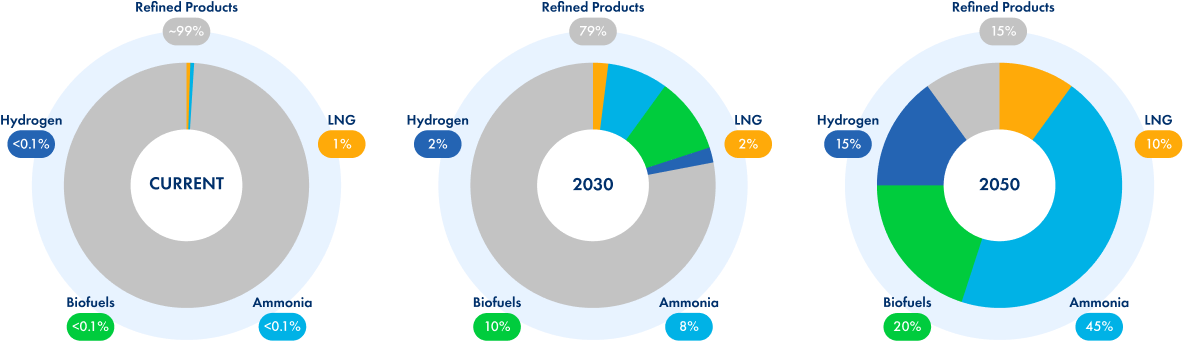
In a net zero emissions (NZE) scenario, the market share size of alternative maritime fuels increase significantly from 2030, and eventually taking a majority share over traditional fuels by 2050.
Our expertise in the marine market:
etasca’s expertise is around supporting investment into projects for alternative marine fuels such as LNG, methanol, and ammonia. We’ve provided market, technical and environmental support (from due diligence to independent reviews) for several large storage providers operating marine fuel infrastructure.
Commercial Advisory
etasca’s commercial due diligence is underpinned by a deep understanding of the energy and chemicals value chains, regulations and markets.
- Commercial due diligence
- Value creation and strategy
- Independent market reports
- Business model

Independent supply, demand and trade outlooks for key alternative marine fuel feedstocks and products

Pricing forecasts for key alternative marine fuels

Knowledge around marine regulations and requirements such as IMO regulations
- Commercial due diligence
- Value creation and strategy
- Independent market reports
- Business model
Technical Advisory
etasca’s technical advisory is led by chartered chemical engineers who have both prior operational experience managing plants as well as advisory experience where they have inspected and benchmarked operations.
- Technical due diligence
- Feasibility studies and technoeconomic reviews
- TRL and scale-up assessments
- Technical valuations

Deep technological know-how surrounding emerging alternative marine fuel production technologies
Bespoke methodologies for project and asset reviews for tank storage providers, terminal operatros, and marine fuel suppliers

CAPEX and OPEX evaluations for new projects
- Technical due diligence
- Feasibility studies and technoeconomic reviews
- TRL and scale-up assessments
- Technical valuations
ESG Advisory
The Environmental, Social and Governance (“ESG”) performance of a business is increasingly recognised as a key determinant of future value.
- Environmental due diligence
- ESG alignment studies
- ESIA reviews and preparations
- Carbon intensity valuations

Deep knowledge surrounding maritime regulations and mandates

Knowledge of environmental regulations for project finance in addition to established methodologies for environmental due diligence

Carbon intensity modelling for various marine fuel production routes
- Environmental due diligence
- ESG alignment studies
- ESIA reviews and preparations
- Carbon intensity valuations