
Aviation
Air travel has become an integral part of our lives. With global aviation emissions accounting for 2-3 percent of all CO2 emissions and now with firm mandates and regulations in place to decarbonise the sector, there is a pressing need to find alternatives to conventional jet fuel. Explore how new sustainable fuels are addressing the need to decarbonise this hard-to-abate sector.

Facts & Figures

2.5%
CO2 contribution from aviation industry relative to global emissions

80%
CO2 emissions reduction potential from SAF compared to conventional jet fuel

1.75 trillion
USD required to decarbonise
%
CO2 contribution from aviation industry relative to global emissions
Our Focus Areas
SAF
PROS:
- No modifications required to existing fueling infrastructure
- Significant carbon reductions compared to traditional jet fuel
CONS:
- High production costs
- Heavy reliance on bio-feedstock
eSAF
PROS:
- Potential to be a carbon neutral fuel if produced using renewable energy
- Higher feedstock availability
- No modifications required to existing fueling infrastructure
CONS:
- Significant reduction in cost of production required for commercial viability
Batteries
PROS:
- Zero carbon emissions
- Strong power dissipation performance
CONS:
- Low energy density – battery technology limited to short-haul flights
- Battery materials may have high carbon impacts
Hydrogen
PROS:
- High energy density by weight
- Zero carbon emissions
CONS:
- Requires change to existing fueling infrastructure
- Low volumetric density – creating storage challenges
- High production costs
Market Share Size
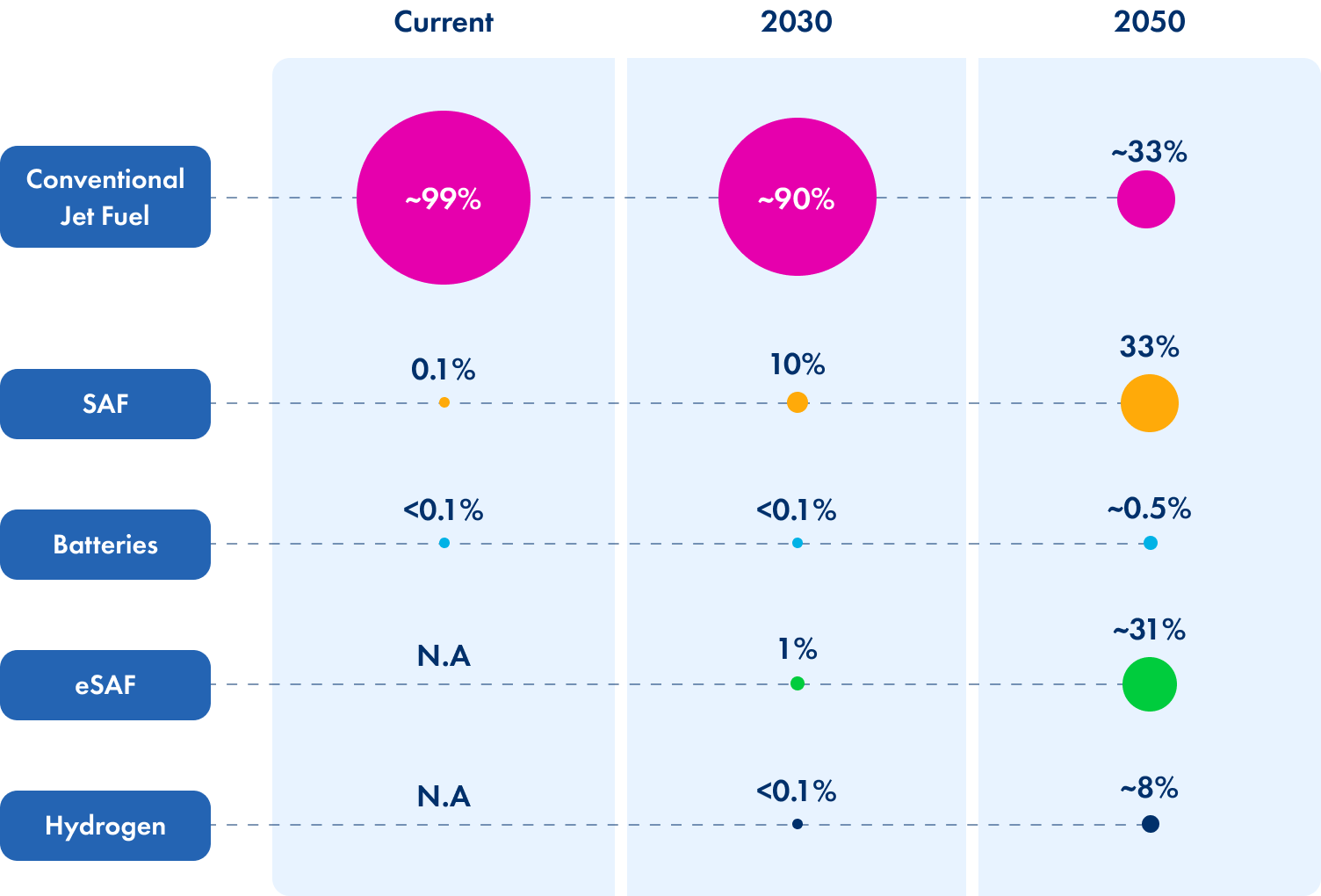
The aviation industry has pledged to decarbonise by implementing more sustainable alternative fuel options. Currently Jet-A1, the aviation fuel derived from crude oil, dominates the market.
Going forwards, SAF derived from biomass is expected to increase its market share given it is the most readily available drop-in fuel.
By 2050 more advanced fuels should appear and in a net-zero scenario eSAF and SAF will need to have a majority share with batteries and potentially hydrogen having a minor share for short haul journeys.
However, achieving net zero for the industry presents a complex set of challenges, including technology commercialisation, fuel efficiency & performance, infrastructure requirements and importantly cost of production.
Our expertise in Aviation:
Our experience is around supporting investment into sustainable aviation fuel projects. We’ve provided market, technical and environmental support (from due diligence to independent reviews) for some of the largest aviation fuel projects. Our experience is wide-ranging from understanding how the market for bio-feedstocks might evolve through to deep technical understanding of sustainable aviation fuel pathways.
explore our expertise 
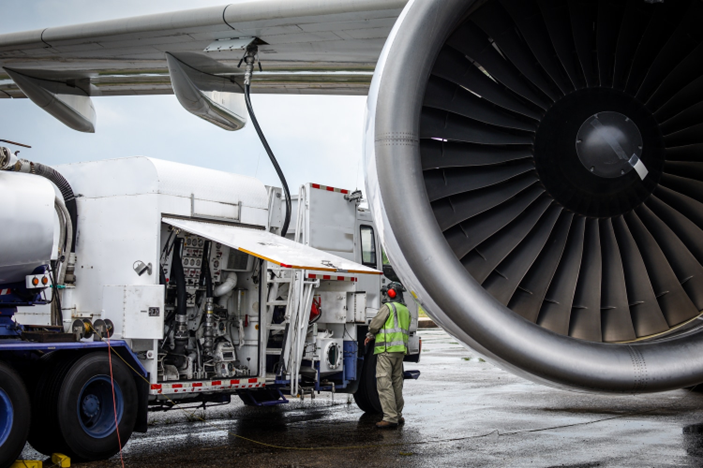
Commercial Advisory
for Aviation Fuel Investments
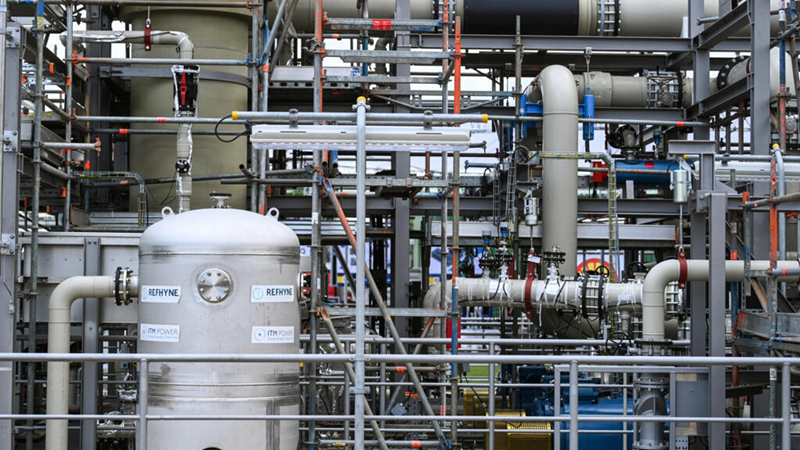
Technical Advisory
for Aviation Fuel Investments
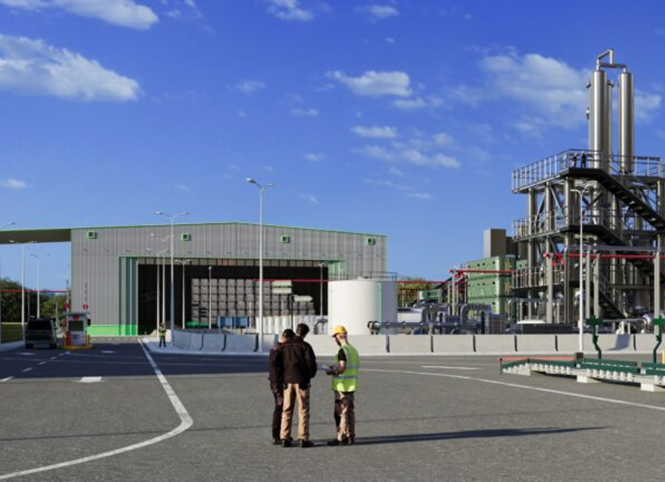
ESG Advisory
for Aviation Fuel Investments
Commercial Advisory for Aviation
etasca’s commercial due diligence for aviation fuel markets is underpinned by a deep understanding of the feedstocks, technology pathways and regulatory drivers.
WE OFFER:
OUR APPROACH:

- Independent supply, demand and trade outlooks
- Feedstock outlooks including UCO, tallow, sugar and cereals, forestry residues, biogenic CO₂, hydrogen, ethanol and methanol

- Price forecasts for key feedstocks, SAF and Jet
- Cost of production for SAF, hydrogen and battery production routes

- Knowledge around aviation industry regulations, mandates, incentives and key aviation market developments
Technical advisory for Aviation
etasca’s technical advisory is led by chartered chemical engineers who have both prior operational experience managing plants as well as advisory experience where they have inspected and benchmarked operations.
WE OFFER:
OUR APPROACH:

- Deep technological know-how surrounding emerging sustainable aviation fuel technologies including HEFA, ATJ, MTJ, eRWGS and FT amongst others

- Bespoke methodologies for project and asset reviews for aviation fuel production projects, fuel suppliers, aircraft operators, and airports

- CAPEX and OPEX evaluations for new projects
ESG advisory for Aviation
The Environmental, Social and Governance (“ESG”) performance of a business is increasingly recognised as a key determinant of future value.
WE OFFER:
OUR APPROACH:

- Deep knowledge of SAF regulations and mandates

- Carbon intensity modelling for various sustainable aviation fuel pathways

- Knowledge of environmental regulations for project finance (including equator principles) in addition to established methodologies for environmental due diligence
our case studies
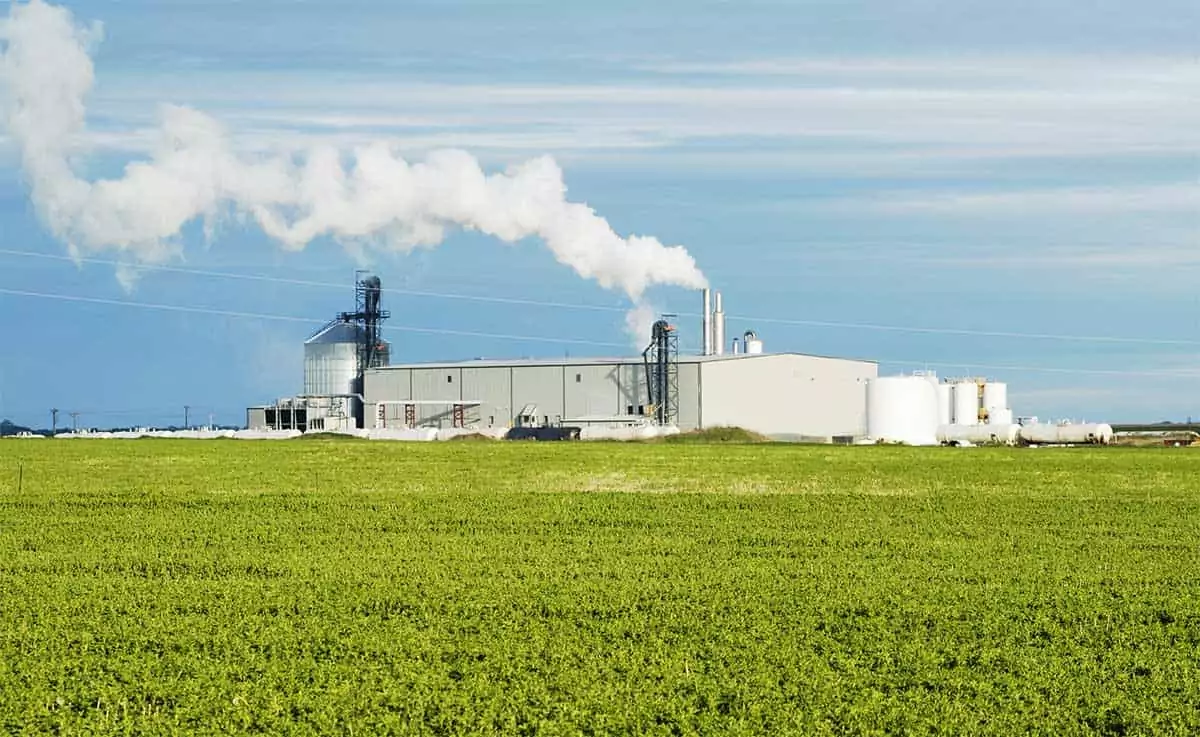
HEFA Project, South America
Commercial and technical prefeasibility study for the construction of a new SAF plant
UCO Collector Acquisition Support, MENA
Commercial and technical due diligence for the acquisition of a UCO collector
eSAF Project, Europe
Commercial and technical due diligence for a major eSAF development
eMethanol-to-Jet Technology Review, Global
Independent technology and market analysis for e-methanol to jet route for a major licensor